Travel Tips · 7 min read · May 2026
Maldives Weather: A Month-by-Month Guide for Luxury Travelers
Every month in the Maldives has a different character. IMJ breaks down the weather, the atmosphere, and what each month actually delivers for luxury island travel.
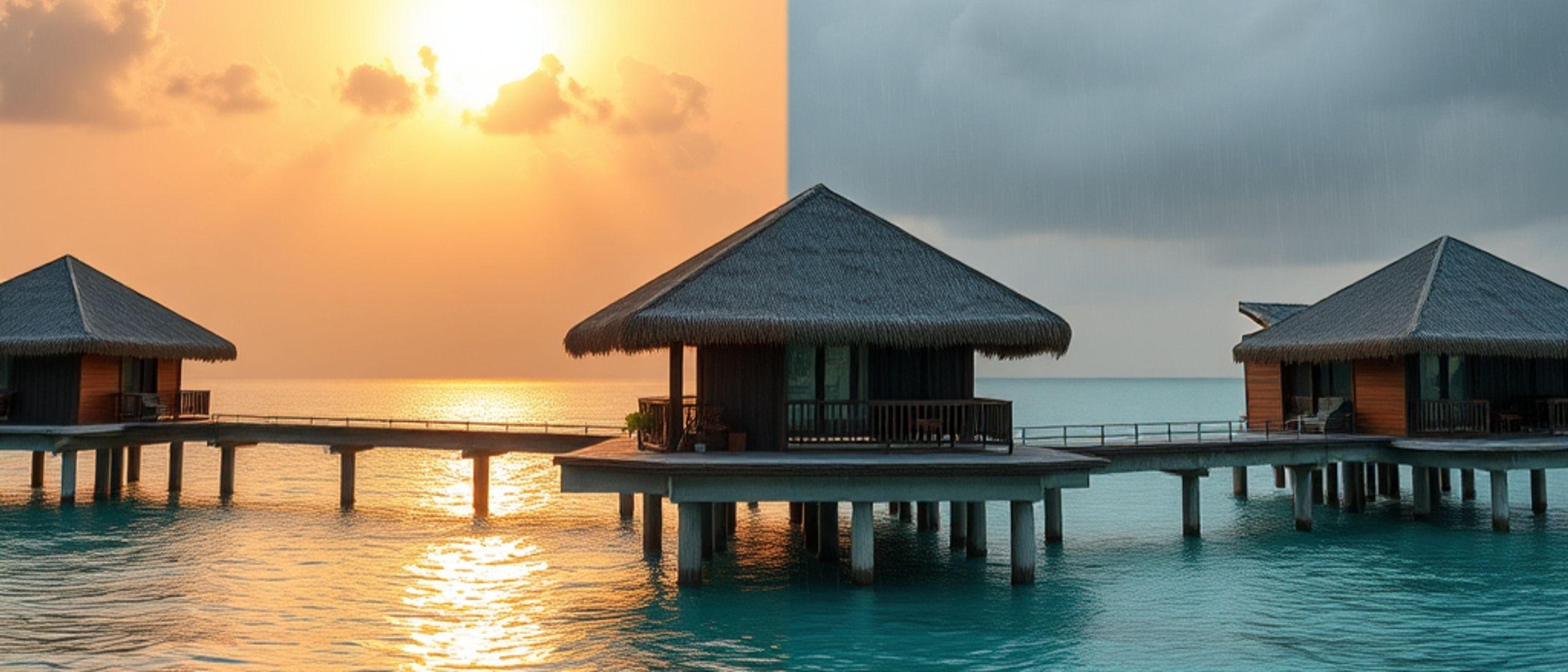
The Maldives sits close to the equator — which means temperatures remain warm year-round and the ocean is always swimmable. What changes across the year is the quality of the sky, the state of the sea, and the mood of the island. Understanding these shifts month by month is the most practical way to choose when to travel.
January and February
The clearest, calmest, most consistently excellent months in the Maldives. Northeast monsoon is fully established — low humidity, reliable blue skies, calm seas, and excellent visibility for snorkeling and diving. Peak season pricing and occupancy, particularly in January. February is slightly less crowded than January and can offer a better balance of quality weather and resort atmosphere.
March
Excellent conditions continue, with slightly warmer temperatures and the beginning of the transition toward higher humidity.
Excellent conditions continue, with slightly warmer temperatures and the beginning of the transition toward higher humidity. Still very much peak-quality weather. March pricing is lower than January–February, making it a strong choice for guests who want dry-season conditions at a marginally more accessible rate.
April
A warm, golden month with reliably good weather in the first half, transitioning toward the monsoon in the second half. April can offer an ideal balance: near-dry-season conditions, softer demand than peak months, and a warmth of light that makes photography extraordinary. IMJ particularly likes April for couples who have flexibility and are not rigidly seeking the most predictable weather.
May
The transition month. Early May often retains dry-season conditions. Late May sees increasing cloud and the arrival of the southwest monsoon. For budget-conscious luxury travelers, early to mid-May is one of the best value windows in the calendar — the weather is often still excellent, rates have dropped significantly, and resorts are noticeably quieter.
June to August
The wettest months of the year. Rain typically falls in afternoon showers rather than continuous rain. Mornings are often clear. The ocean remains warm and swimmable, and house reef snorkeling continues to reward. These months attract wellness travelers, surfers, marine-life enthusiasts, and guests seeking the quietest, most affordable Maldives experience. Manta rays in Hanifaru Bay (Baa Atoll) peak during this period.
September and October
September is still monsoon, but conditions begin to improve through the month. October is one of the strongest value months in the Maldives — weather improving rapidly, rainfall decreasing, seas calming, and pricing still at shoulder-season levels. By late October, conditions can be outstanding, and the resort atmosphere is calm and unhurried.
November
The end of the monsoon and the beginning of the northeast monsoon transition. Weather improves markedly, seas calm, and conditions approach dry-season quality. November pricing is typically more accessible than December and produces a similar experience for many guests. IMJ recommends November for guests who want near-peak-season conditions without peak-season rates or crowds.
December
Peak festive season from mid-December onward. Weather is excellent. Resorts are vibrant. Prices are at their highest. Booking must be done far in advance — 6–9 months for top-tier resorts. The festive period (20 December–5 January) creates a unique atmosphere in the Maldives — celebratory, sociable, and memorably beautiful. For the right guest, there is no better time.
IMJ Travels · May 2026