Travel Tips · 6 min read · May 2026
Maldives Rainy Season: Why the Softer Months Can Still Be Beautiful
The Maldives rainy season is not what most travelers imagine. IMJ explains what monsoon weather actually looks like on the islands — and why the right guest finds it one of the best times to visit.

The Maldives rainy season has a reputation that is worse than its reality. Travelers who avoid it are missing something genuinely valuable — a quieter, more lush, often more beautiful version of the archipelago, available at rates that would be impossible in peak season.
The key misunderstanding is how monsoon rain actually behaves in the Maldives. It is not the relentless, all-day grey downpour of a northern European winter. It is the intense, warm, short-lived afternoon shower characteristic of equatorial climates — typically lasting 30 to 90 minutes, followed by clearing skies and a clean, washed quality of light that can be extraordinary.
What Monsoon Weather Actually Looks Like
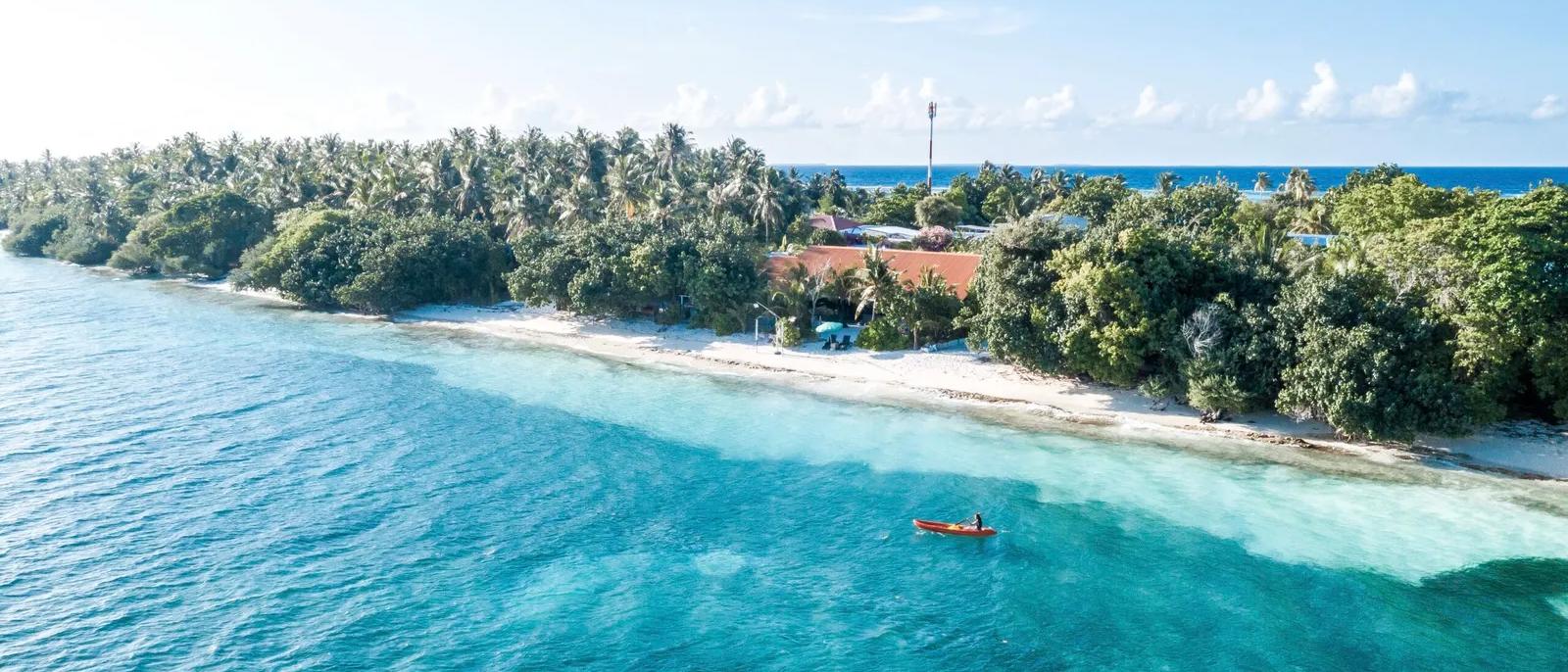
Mornings during the Maldives rainy season are frequently clear and calm.
Mornings during the Maldives rainy season are frequently clear and calm. The best snorkeling sessions often happen in the first few hours after sunrise, when the water is still and the sky is blue. Cloud builds through the afternoon, sometimes producing a dramatic storm — impressive to watch from a villa deck — and clearing by evening. The evening light after a monsoon shower can be remarkable.
Peak rainfall months (June–July) do produce more consistently cloudy mornings in some years. This is worth acknowledging. But even in these months, IMJ has hosted guests who reported four, five, or six consecutive clear days. The Maldives is not reliably rainy in monsoon season — it is variably rainy, with short-lived, dramatic weather patterns.
The Case for Rainy Season Travel
Pricing is the most obvious benefit. Luxury resorts that charge a significant premium in December and January offer rates that can be 25–40% lower during the monsoon months. For guests who want the same resort experience with more privacy and a better rate, the rainy season delivers exactly that.
Manta rays are the compelling marine reason. Hanifaru Bay in Baa Atoll — where hundreds of manta rays gather to feed in the plankton-rich monsoon waters — is one of the most extraordinary wildlife experiences in the world. It happens during the southwest monsoon. Guests who travel specifically for manta encounters must travel in the rainy season. At Four Seasons Landaa Giraavaru or Anantara Kihavah in Baa Atoll, this is the defining reason to visit.
Which Resorts Shine in the Rainy Season
Not all resorts perform equally in the monsoon months. Resorts in more sheltered lagoons — where the island geography provides some protection from the southwest swell — tend to have more consistent daily conditions. North and central atolls (Baa, North Malé, Raa) generally have more sheltered positions than southern atolls during the southwest monsoon. IMJ matches guests to resorts with the right lagoon characteristics and marine draw for their specific monsoon-season travel dates.
Resorts with exceptional wellness facilities are particularly strong choices for the rainy season — JOALI BEING, Six Senses Laamu, and Four Seasons Landaa Giraavaru all carry a sense of intentional calm that aligns beautifully with the lusher, more atmospheric version of the Maldives that the monsoon produces. The softened light, the dramatic afternoon skies, and the quieter resort atmosphere combine with serious wellness programming to create an unusually restorative experience.
Activities in the Rainy Season
The activities that make the Maldives extraordinary do not disappear in the monsoon. Snorkeling remains rewarding on house reefs — visibility is lower than the dry season but marine life, particularly larger pelagic species, is more active. Spa treatments, private dining, sunset dhoni cruises, and in-villa time all continue uninterrupted. For surf-focused travelers, the southwest monsoon produces the best waves in the Maldives — particularly around the southern and central atolls — making it the peak season for a different kind of Maldives enthusiast.
IMJ Travels · May 2026